Old Clay Drain Pipes: What Happens as They Age?


If you live in an older home, there may be more happening beneath your property than you realise.
Before modern PVC drainage became commonplace, clay and earthenware pipes were widely used for drainage. These pipes can remain in service for many decades, but as they age, problems can develop at the joints, around cracks and where the ground has moved. For homeowners, the first sign is often a blocked drain that keeps coming back.
What are clay drain pipes?
Clay drainage pipes, sometimes referred to as earthenware or vitrified clay pipes, were made from fired clay and used extensively in older drainage systems. They are durable and resistant to many forms of chemical deterioration, which is why some older clay pipes are still functioning today. However, the pipe sections are rigid and are joined together in sections, meaning the joints can become vulnerable as the system ages.
Newer drainage systems generally use modern plastic pipework with fewer joints and different joining systems.
Why do old clay pipes cause problems?
The clay itself is not necessarily the problem. The issue is often what happens to the pipe and its joints over time. Ground movement, settlement, tree roots and general deterioration can cause joints to move or small cracks to develop. Once there is an opening or damaged section, soil, water and roots can begin to enter the pipe.
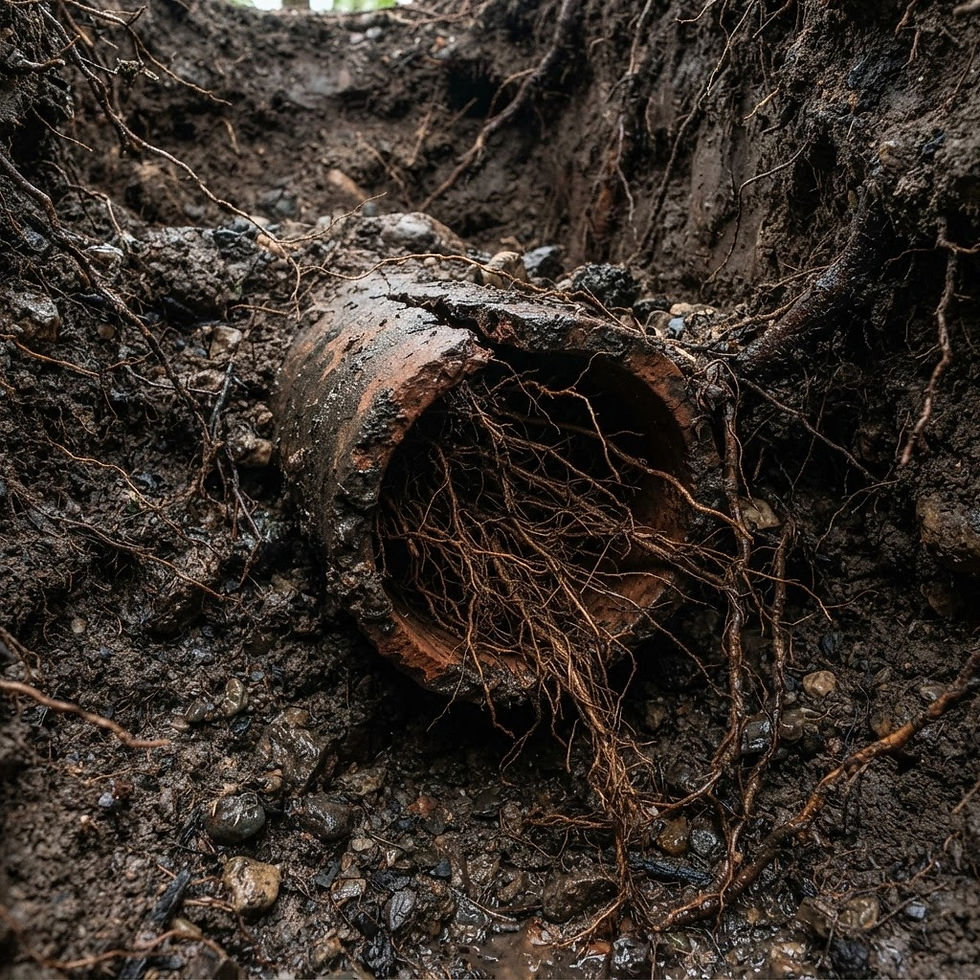
Tree roots are a common culprit
Tree roots are naturally attracted to moisture. If an older drain has a small gap at a joint or a crack in the pipe, moisture can escape into the surrounding ground. Fine roots can find these openings and grow into the pipe. Once inside, the roots can continue to grow and form a mass that restricts the flow of wastewater.
This is why some blocked drains seem to be a recurring problem. Clearing the blockage may restore the flow, but if the underlying pipe has a damaged joint or crack, the cause of the problem may still be there.
What does an old clay pipe look like on a CCTV inspection?
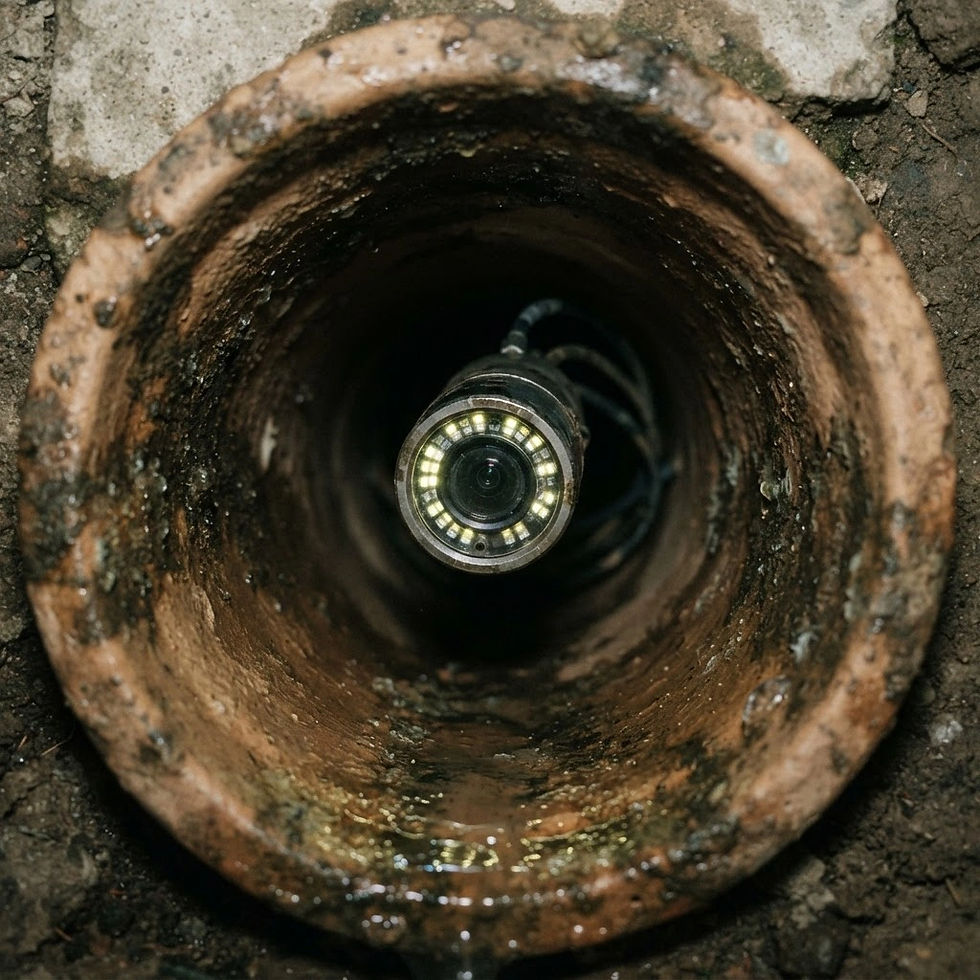
A CCTV drain inspection can reveal problems that aren't visible from the surface.
Depending on the condition of the pipe, an inspection may identify:
Tree root intrusion
Cracked or fractured sections
Displaced joints
Gaps between pipe sections
Soil or debris entering the pipe
Build-up restricting the pipe
Sections that have collapsed
Areas where the pipe has moved or settled
A camera inspection is particularly useful when a drain has been blocked more than once, because it can help determine why the blockage keeps returning.
Does an old clay drain need to be replaced?
Not necessarily. An older pipe that is still structurally sound and functioning properly does not automatically need to be replaced simply because of its age. The appropriate solution depends on the condition of the pipe and the nature of the problem.
In some cases, clearing roots or removing a blockage may be all that is required. In other situations, a damaged section may need to be repaired or replaced. The important thing is to identify the actual fault before deciding what work is required.
What if the drain keeps blocking?
Repeated blockages are worth investigating. If the same drain continues to block after it has been cleared, there may be an underlying issue within the drainage system. This could be root intrusion, a damaged or displaced joint, a cracked pipe, a build-up inside the line or another structural problem. Rather than simply treating the blockage each time it occurs, a CCTV inspection can provide a clearer picture of what is happening underground.
Don't ignore the warning signs
Some drainage problems develop gradually. You may notice that a drain is slower than it used to be, that a blockage is happening more frequently, or that water is taking longer to clear. Other signs can include unusual smells, gurgling drains, wet areas around the property or wastewater backing up.
If an older drainage system is showing repeated problems, finding the cause early may provide more options for repair before a section deteriorates further.
What's underneath your property?
You cannot always tell what type of drainage pipe is beneath a property simply by looking at the house. If you are experiencing recurring blocked drains or suspect your property has older drainage, a CCTV inspection can help establish what is happening inside the pipe.
At Impact Drainage, we work with drainage systems across Northland, including drainage inspections, blocked drains, repairs and new drainage installations.
If your drain keeps blocking, the blockage may only be the symptom. Finding out what is happening inside the pipe can help identify the actual problem.

Comments